
Quality Built at Every Stage: Inside PIPL’s QA/QC & Inspection Framework
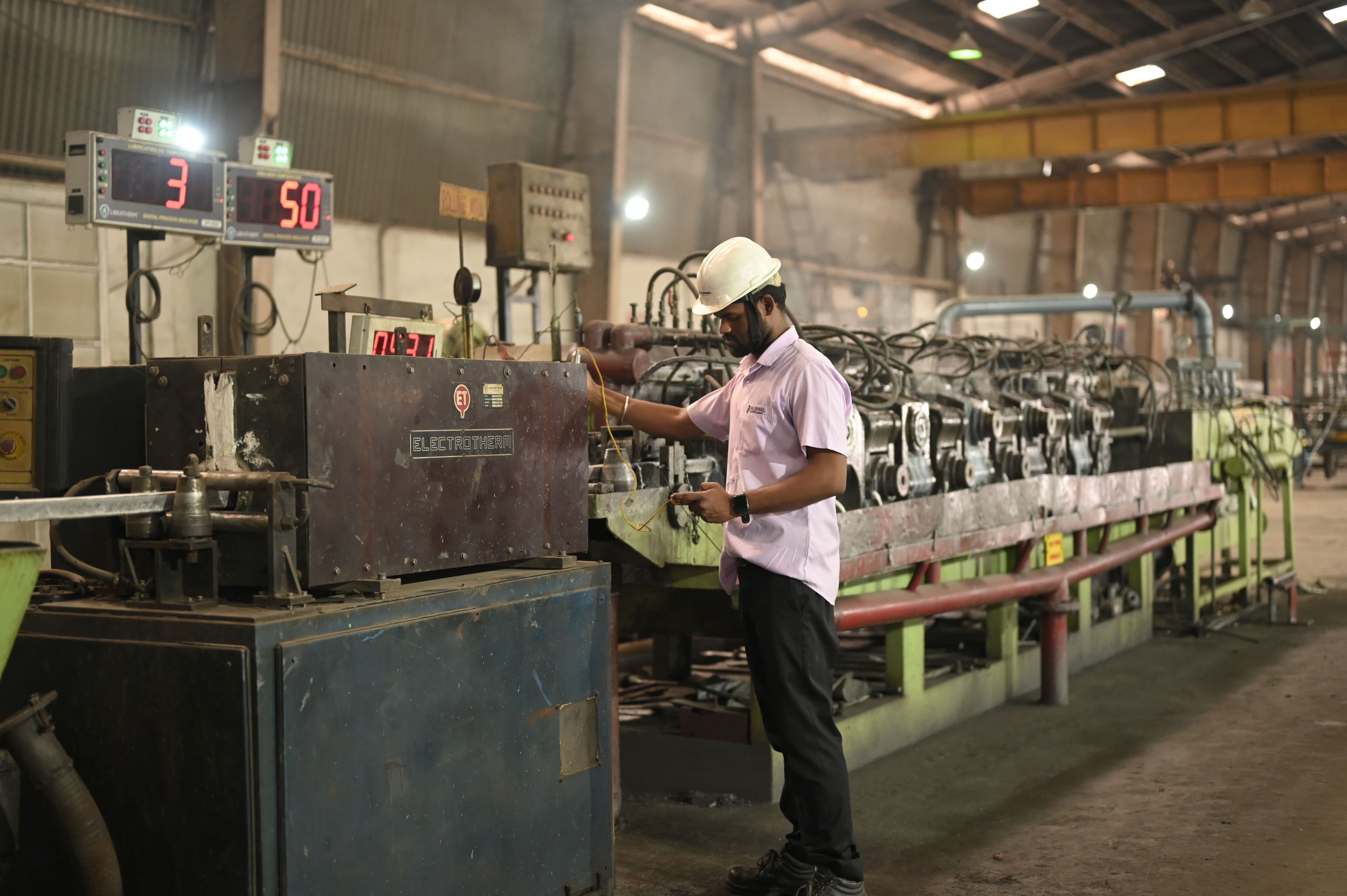
A look inside PIPL’s seven-stage QA/QC framework—from incoming material inspection and process control to final testing, traceability and dispatch.
Quality Begins Before Production
For products that form part of power transmission and distribution infrastructure, quality cannot be treated only as a final inspection activity.
At Palriwal Industries Private Limited (PIPL), Quality Assurance and Quality Control are integrated across the manufacturing process through defined controls, systematic inspection, testing and traceability.
“Quality is not inspected only at the end—it is built into every stage of manufacturing through controlled processes, systematic inspection, testing and complete traceability.”
Products Covered by the QA/QC Framework
Aluminium Products
Aluminium Wire Rod, Aluminium Alloy Wire Rod, AL59 Wire Rod, Flipped Wire Rod and other specialised aluminium products for industrial applications.
Overhead Conductors
AAC, AAAC, ACSR, AACSR, ACAR, AL59, HTLS and other specialised overhead conductors manufactured in accordance with applicable standards and customer requirements.
LT Aerial Bunched Cables
LT Aerial Bunched Cables for low-voltage power distribution, manufactured and tested in accordance with applicable standards and customer specifications.
PIPL’s Seven-Stage QA/QC Framework
1. Incoming Raw-Material Inspection
The first objective is to prevent non-conforming material from entering the manufacturing process.
Verification may include dimensions, chemical composition, electrical conductivity or resistance, mechanical properties, surface condition, Certificate of Analysis verification and raw-material traceability.
2. Process Quality Control
Critical parameters are monitored during production to maintain process consistency.
Depending on the product and manufacturing stage, checks can include wire diameter, surface condition, electrical resistance, mechanical properties, lay length or ratio, conductor construction, wire count and arrangement, together with batch tracking.
3. In-Process Inspection
Stage-wise inspection helps identify process variations before they affect larger quantities of production.
Immediate deviation reporting and feedback to production support corrective action and reinforce process control.
4. Final Inspection & Testing
Before dispatch, the finished product is evaluated against defined requirements.
Checks may include overall and individual wire diameter, electrical resistance, breaking load, elongation, lay characteristics and visual and dimensional inspection.
5. Traceability
Traceability creates an end-to-end audit trail linking finished products with relevant heat or batch numbers, raw materials, manufacturing logs, inspection reports and test certificates.
This provides continuity between manufacturing, inspection and documented product conformity.
6. Third-Party Inspection
Where required by the customer or project, the quality function coordinates external inspection activities and maintains relevant technical documentation.
This can include approved GTP/technical specifications, Quality Assurance Plans, Manufacturing Quality Plans, routine test reports, calibration certificates and drum-related documentation.
7. Packaging & Dispatch
Quality control continues until the product is ready to leave the manufacturing facility.
Final checks include drum winding quality, labelling, length or quantity verification, packaging integrity and measures intended to protect the product during transportation.
QA and QC: Different Roles, One Objective
Quality Assurance (QA) is primarily preventive. It establishes systems, procedures and controls designed to reduce the possibility of defects occurring.
Quality Control (QC) is primarily verification-based. It uses physical inspection, measurement and testing to determine whether materials and finished products conform to defined requirements.
Together, QA and QC create a continuous quality loop extending across the manufacturing process.
The Quality Chain
Aluminium Ingot → CCR / Wire Rod → Wire Drawing → In-Process Inspection → Stranding / Cable Manufacturing → Testing → Final Inspection → Traceability → Dispatch
Why In-Process Inspection Matters
Final testing provides an important confirmation of finished-product conformity, but it cannot replace systematic process control.
In-process inspection helps identify variation at an earlier stage, providing an opportunity for corrective action before the issue affects larger production quantities.
Building Confidence Through Documentation and Traceability
The objective of PIPL’s QA/QC framework is to support consistent product quality, prevent defects, maintain traceability and provide products backed by verified inspection and test documentation.
For customers, engineering teams and inspection agencies, this creates a clearer link between the finished product and the manufacturing, inspection and testing processes behind it.
Frequently Asked Questions
Why is QA/QC essential?
QA/QC helps ensure that materials, processes and finished products conform to applicable standards and customer specifications.
Why is in-process inspection required?
It helps identify process variation early and supports corrective action before an issue affects larger quantities of production.
Why isn't final testing alone sufficient?
Final testing confirms the status of the finished product, whereas consistent product quality depends on continuous process control throughout manufacturing.
What is the objective of QA/QC at PIPL?
To support consistent product quality, prevent defects, maintain traceability and supply products backed by verified documentation.
Anama Charan Patra, DGM – Quality Assurance, Quality Control & Inspection
Palriwal Industries • Published 23 October 2026
Let's build something together.
Explore our product lines, visit our manufacturing facility, or get in touch with our team to discuss your next project.